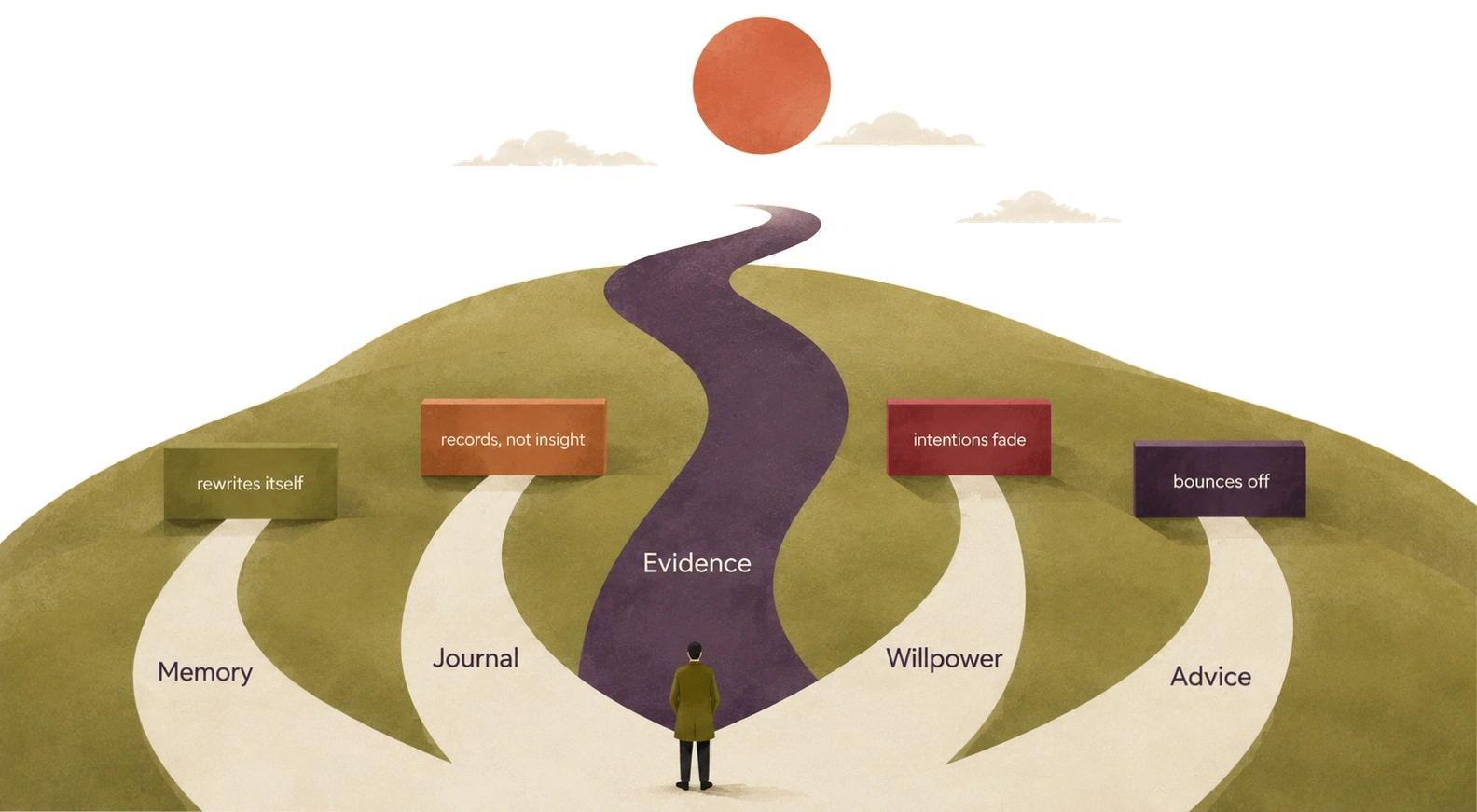
Memory, journaling, willpower, and outside advice can help us decide more deliberately. But none alone provides a complete and reliable basis for a decision. Below, we cite research demonstrating the limitations of these familiar ways of making decisions and examine what they have in common.
Relying on memory and self-analysis
Once we know how a situation turned out, the mind quietly reshapes our memory of what we expected. The outcome begins to seem obvious in hindsight, though we may have judged the situation differently before learning it. This well-documented effect is called hindsight bias1,2,38.
Introspection also has limits. When explaining our actions, we often construct a plausible account after the event because we lack direct access to every internal process that shaped the decision3. In comparative judgments, people often rate themselves above others4. Self- and outside assessments of personality often agree, but their accuracy varies by trait and context5,41,49. Memories and explanations formed after the fact therefore do not provide a complete or impartial picture.
Keeping a journal without analyzing it
Notes accumulate, but without systematic analysis they rarely form a coherent picture6. Another risk arises when someone repeatedly returns to the same failures without reinterpreting them: a journal can sustain rumination — repetitive negative thinking that increases distress7.
In a controlled study, participants who wrote only about their emotions after a stressful event felt worse than those who also reflected on its causes, meaning, and consequences8.
Without that reflection, a journal can help us see the maze of our own thoughts, but not always the way out.
Counting on intention and willpower alone
A firm intention shows what someone wants but weakly predicts behavior change. Even when researchers substantially strengthened participants’ intention to act, actual behavior changed far less9.
A goal begins to guide action when the desired outcome is clear and progress is checked regularly10. Promises to ourselves — “I’ll start,” “I’ll stop,” “I’ll change” — are therefore not enough: we need concrete actions and a way to check their results.
Misjudging advice
We often give our initial opinion too much weight and underrate outside advice — even when the other person is more experienced and better informed11. With AI, the risk reverses: a persuasive answer is easy to mistake for an independent, unbiased assessment39.
Language models are trained partly on human preferences. Because users more often reward answers that confirm their position, models receive a systematic signal to agree12,40. In a study of 11 modern models, they affirmed users were right about 50% more often than people did13. In follow-up experiments about real personal conflicts, participants who spoke with an agreeable model became more convinced they were right and less inclined to repair the relationship — yet rated its answers more highly, trusted them more, and were more willing to return13.
Advice that always confirms we are right comes at a cost: the decisions we make based on it.
Conclusion
These approaches share one weak spot: the quality of the feedback we usually get from our own experience.
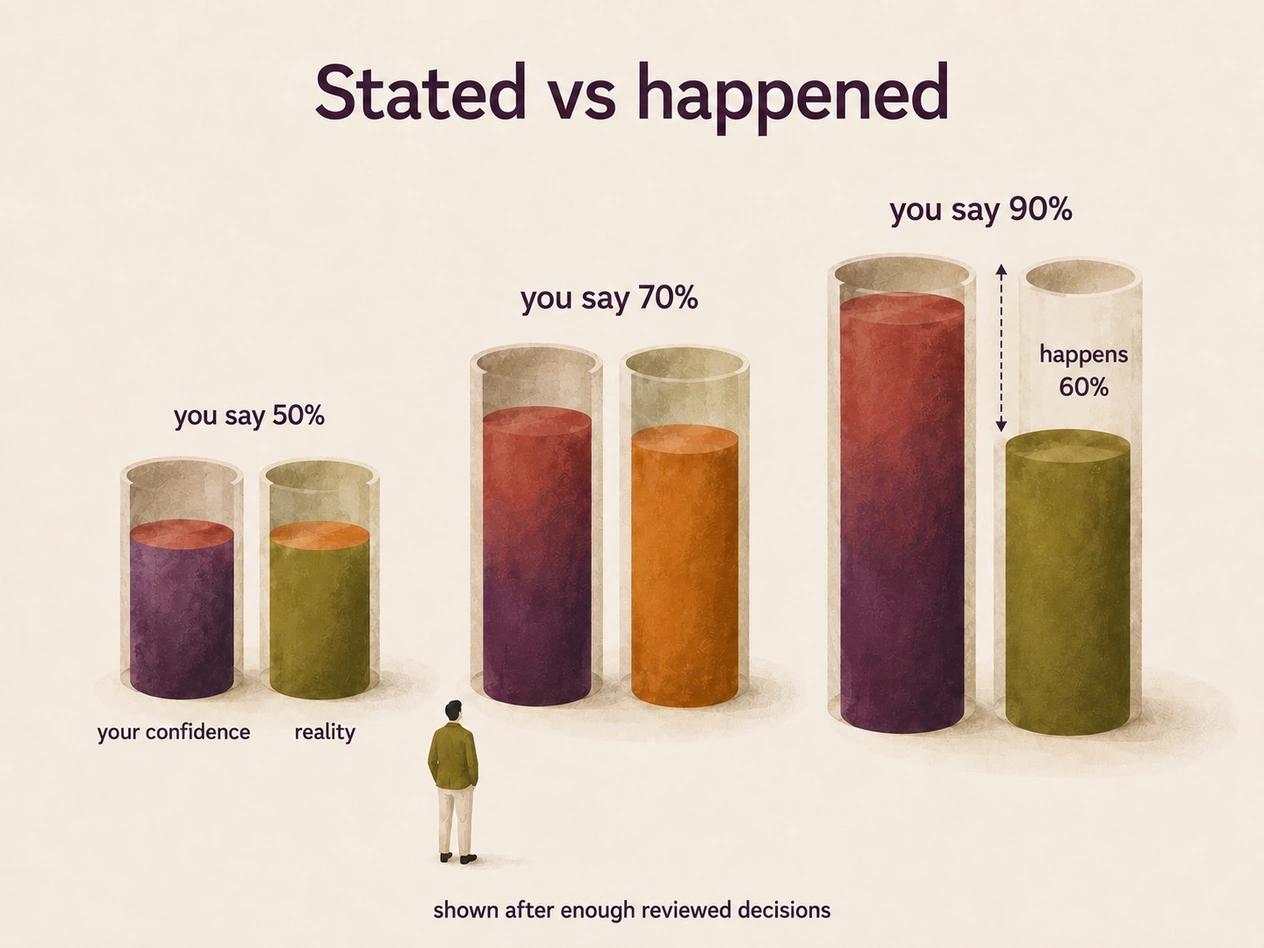
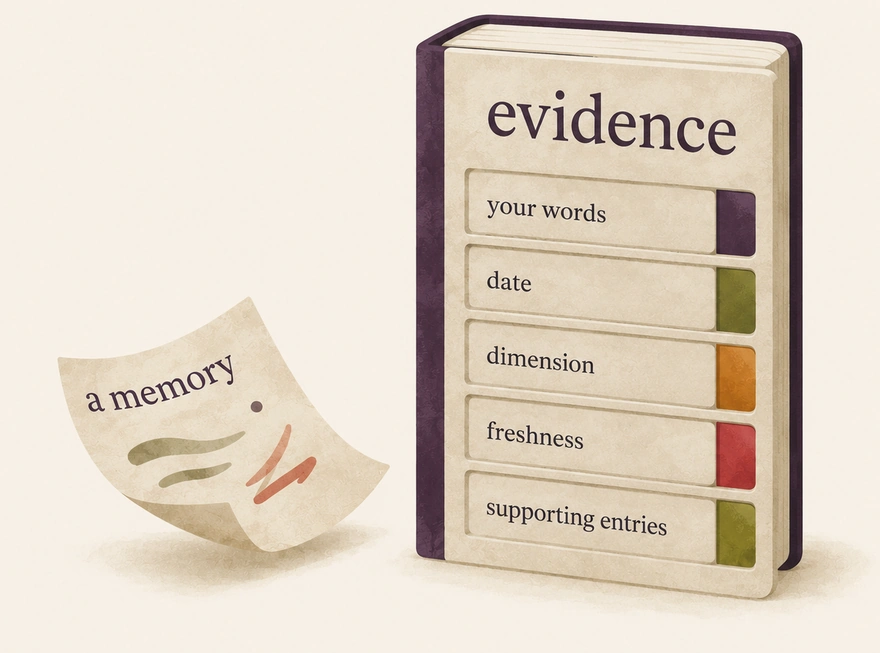
For experience to teach us, we need the full chain: decision — expected result — confidence in the prediction — actual outcome. In ordinary life, it almost always remains incomplete: consequences arrive months or years later, outcomes can have several causes, initial expectations are rarely recorded, and memory reshapes them to fit the known result.
Decision science calls this a “wicked” learning environment: feedback is delayed and ambiguous, with no objective benchmark for the result. We can therefore face similar situations repeatedly and still learn the wrong lessons from experience14,15.
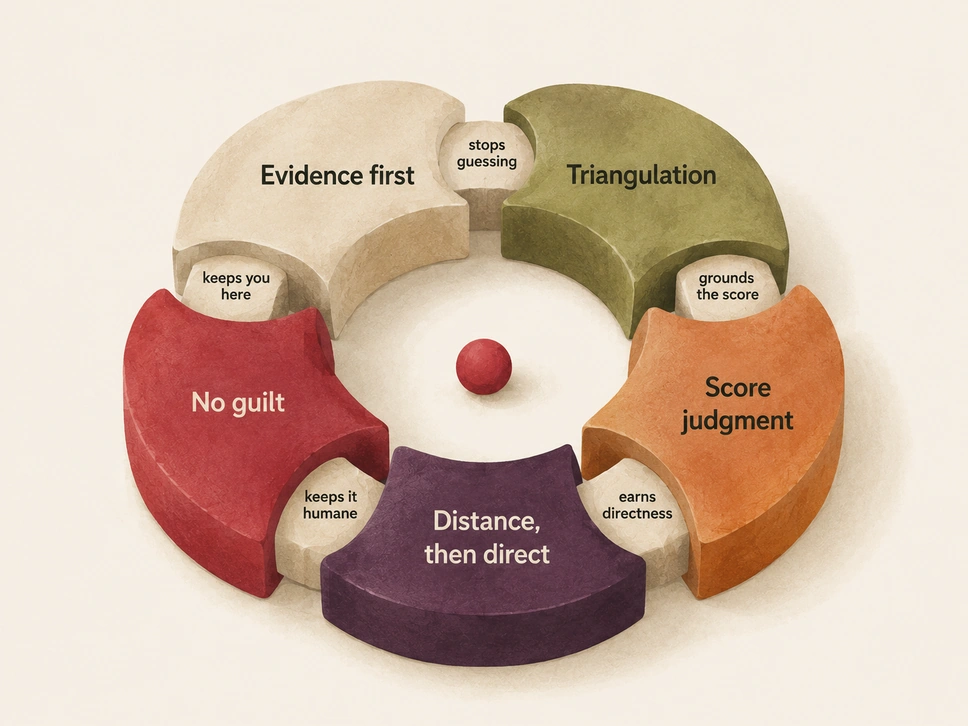
Avrelius does not replace personal experience: that experience remains the system’s main raw material. Avrelius changes how we learn from it by closing this chain and making it transparent. The method’s five principles show how.