The big questions remain open
What could I become exceptional at? Where would my abilities matter most? What deserves the next decade? Without evidence from our own lives, mood and circumstance often decide for us.
AI sage grounded in your life
AI sage grounded in your own experience · Private beta
Your voice notes become a digital model of you. Avrelius reveals patterns and blind spots to help you take your next step.
Your voice notes become a digital model of you — your words, decisions and outcomes connected over time. Avrelius uses AI to reveal patterns, possible tensions and blind spots, helping you take your next step based on evidence from your own life.
Private beta is underway.
§ 01 — The problem
Change careers or stay. Start a company. Choose a partner. Move, sell, invest, commit. At every crossroads, advice is abundant — but it reflects someone else’s life. Reconstructing your own evidence can take weeks, if it was recorded at all.
What could I become exceptional at? Where would my abilities matter most? What deserves the next decade? Without evidence from our own lives, mood and circumstance often decide for us.
Chat assistants are designed to keep us engaged, so our plan is always “great.” We know what that agreement is worth.
Memories stay in your head; notes pile up in apps. Links between events, people, decisions and outcomes do not form by themselves. Seeing the whole picture takes time we rarely have.
Months later, we remember the decision but not the reasoning. We rarely compare expectations with outcomes, so we do not learn where our judgment is sharp — or where it quietly fails.
§ 02 — How it works
Everything you tell Avrelius becomes structured evidence linking events, people, decisions and outcomes over time. When you ask for counsel, AI reasons from that growing model instead of starting from scratch.
Step 01
Avrelius begins with 15–25 adaptive questions across 12 areas of life and action. You review the first portrait and correct what it gets wrong. Where evidence is limited, Avrelius shows lower coverage rather than filling it with assumptions.
Your twin · 12 areas
Evidence coverage is still limited in 4 of 12 areas.
Step 02
Leave a short voice note about an event, thought or decision. Avrelius connects it to your record and may ask one optional question a day. Skip a week — no one scolds you. When advice draws on an earlier note, you see the exact words and date.
“I make my worst decisions when I confuse urgency with importance.”
Step 03
Record your decision, expected outcome, confidence level and a review date. Later, add what actually happened. Calibration reveals where your forecasts are reliable — and where confidence runs ahead of the evidence.
Your judgment, calibrated
Decisions reviewed14
Matched what you expected64%
Calibration appears only after at least three decisions have been reviewed. No numbers before the evidence.
Step 04
Ask in chat about a decision, direction or recurring knot. Each week Avrelius surfaces patterns and concrete steps from the record. Every observation follows three beats: truth, reflection, action.
One passage from the mirror
Truth
For the third week, you have said the conversation about renegotiating your partnership with a friend is “almost settled.” There is still no date for it.
Reflection
The conversation is difficult: both the business and the friendship are at stake.
Action
Set a date by Friday — or admit that you are no longer willing to renegotiate the partnership.

This is what the twin is for. Month by month, it becomes a foundation for life’s bigger decisions — career, company, country, partnership. At the next crossroads, you will have more than memory and today’s mood to guide you.
Flattery serves your comfort.
Avrelius serves your direction.
§ 03 — Your data
Avrelius holds some of your most personal information. We treat its protection as an integral part of the product itself and explain plainly who processes your data, where it is stored, and how you can export or delete it.
Avrelius protects your data from unauthorized access. All user data is processed automatically and used only as needed for the service to operate.
For some tasks, Avrelius sends text or audio to external AI providers under terms that prohibit model training on your content. Providers are listed on the privacy page.
Persistent user data is stored in Switzerland: the primary infrastructure in Zurich, the backup infrastructure in Geneva. External providers receive only the data needed for a specific task.
At any time, you can download an archive of your records and digital twin data. Your history remains yours.
You can delete your account at any time. You then have seven days to change your mind. After that, your notes, twin data and stored audio are permanently erased. Gone.
Raw audio is stored for seven days, then deleted. The transcript remains until you delete the note or your account.
There are no ads. The privacy page lists every external service Avrelius uses and what each one is used for.
§ 04 — Building your own Jarvis?
If you are building a second brain from notes, agents, databases and MCP connections, you saw the need before most people did. The breakthrough comes first; then the hard part — keeping it coherent, current and secure. Here is why the hand-built version eventually works against you.
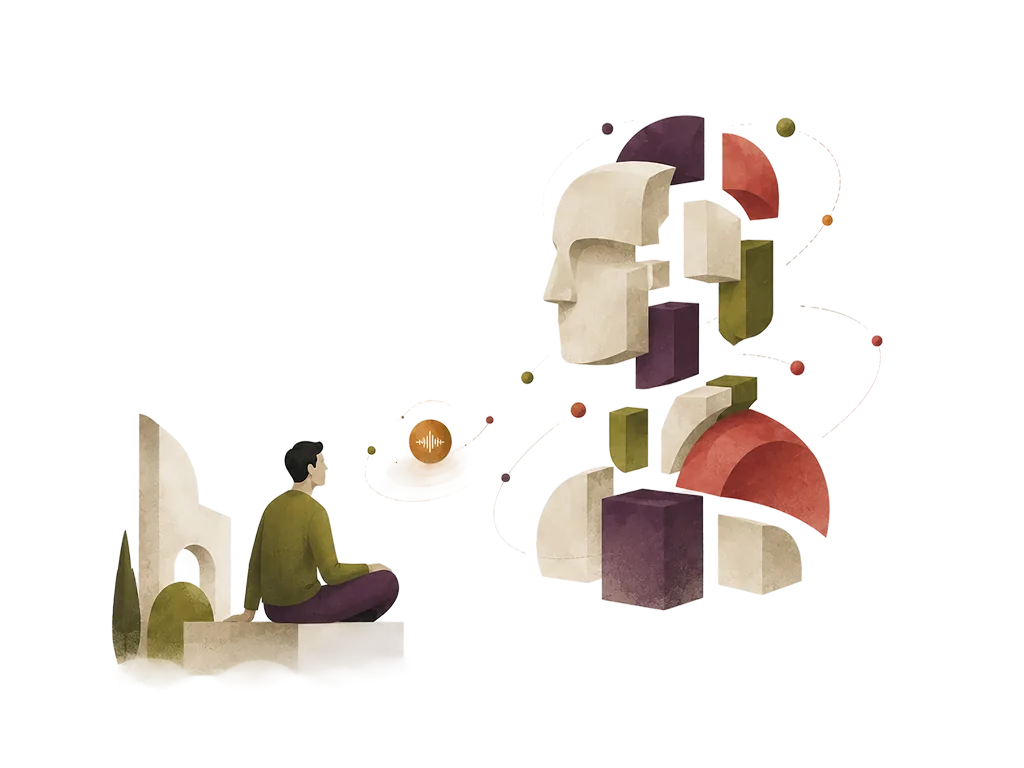
Any tool can accumulate notes. The real work is reconnecting fragments, revisiting contradictions, retiring stale ideas and keeping the system coherent while you live your everyday life. That is exactly what hand-built systems die from — their own communities call memory maintenance the #1 pain point.
A second brain organizes what you already know. A digital twin goes further, using structured questions, assessments and outside perspectives to reveal what your record may miss. It should serve as a decision-making foundation, not a wiki.
A system built for yourself reflects one person’s knowledge and assumptions — and learns from your experience alone. Avrelius combines full-time development, research and feedback from many users, allowing it to account for far more perspectives and real-life scenarios.
The built-and-maintained version now exists. Spend your evenings on your life and decisions, not system maintenance — and tell us where Avrelius still gets things wrong.
ChatGPT / chat assistants
They remember useful facts about you. Avrelius builds a structured portrait of who you are, which you can review and refine, while checking your predictions against reality.
AI journals (Rosebud, Mindsera, Life Note)
They preserve your entries and help you reflect. Avrelius helps you make decisions and shows the exact quotes and dates behind its conclusions.
AI-twin clones (Delphi, HeyGen)
Their twin speaks for you to other people. Avrelius speaks to you — and does not have to agree.
§ 05 — Why we built Avrelius

In April 2026, I sold the company I had spent more than ten years building. Once the deal was over, I found myself facing a new question: what should I devote the next decade of my life to?
I wanted more than advice. I wanted to understand where my strengths could matter most, what I might become exceptional at and which path would make the best use of everything I had learned.
By then, I had started my first business at eighteen, worked with more than twenty companies and invested in startups — including one that later went public on the NYSE. I had also spent years writing about practical philosophy, psychology and decision-making. Alongside that experience were years of notes, choices and outcomes, but no way to see them as one coherent picture.
So I built a digital twin for myself that turned out to be overcomplicated. Avrelius grew from the parts that worked best.
I built it because I needed it first. I still use it today.
— Dmitriy Surkov, founder
§ 06 — Join the waitlist
The closed beta started on July 20, 2026, and will run for about three months. We may also invite selected members to try the product during the beta.
Where this is going
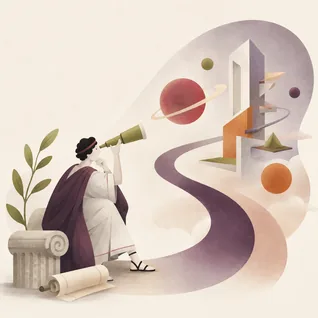
The twin is the foundation. Next may come imports, relationship intelligence, connections to email, social networks, messengers and wearables, and a view of how you change over time. These are plans, not promises — the first cohort will shape the priorities.
§ 07 — Fair questions
No. Avrelius is a decision-support product designed for structured self-reflection. It does not diagnose, treat or replace a licensed mental health professional. It also does not provide legal advice, regulated investment advice, or emergency services. If you are in distress or concerned about your mental health, please seek help from a qualified professional.
The first portrait begins with 15–25 adaptive questions. After that, a useful note can take thirty seconds: one event, thought or decision. Optional questions can deepen the picture, but there are no streaks and no scolding.
Honestly: gradually. The first dated quotes appear within days, and the first weekly mirror after your first week. The radar shows how much source evidence each area has — Avrelius does not pretend to know more before the evidence exists. Calibration begins after several recorded decisions and your feedback on their outcomes.
ChatGPT remembers facts. Avrelius maintains a structured, dated model across 12 areas, shows evidence coverage and possible tensions, checks your predictions against reality, and cites your exact words with dates. Memory is a notebook; this is a mirror.
Avrelius will be available by subscription, with monthly billing and an annual plan. Closed beta participants can use it for free. We will publish pricing after hearing from our first users.